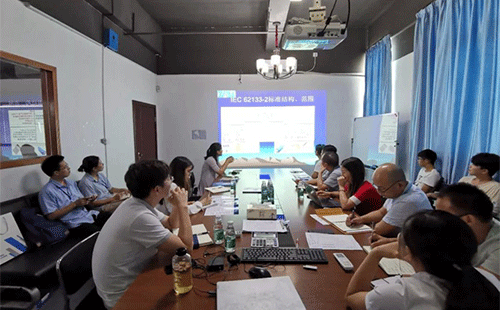
The 21700 cylindrical battery (with a diameter of 21mm and a length of 70mm) enjoys core advantages such as high capacity, high rate, and long cycle life. It is widely used in energy storage devices, power tools, and outdoor power supplies for cross-border exports. It is a popular category of export energy storage accessories. For the export of such batteries, UN38.3 certification serves as the "passport" for cross-border transportation. Unlike the CCC certification in China, which focuses on market circulation compliance, UN38.3 is a mandatory requirement set by the United Nations for lithium battery transportation safety, focusing on controlling the safety risks during battery transportation. Unapproved 21700 cylindrical batteries cannot pass international logistics (shipping by sea or air) and directly affect the shipping efficiency of foreign trade.
Many foreign exporters of 21700 cylindrical batteries often confuse UN38.3 certification with CCC certification. Their core purposes are completely different. It is essential to clearly distinguish between them. The UN38.3 certification focuses on "transportation safety" and verifies the stability of the battery in scenarios such as compression, collision, high and low temperatures, and vibration, preventing risks like leakage and fire. The CCC certification, on the other hand, focuses on "domestic circulation compliance" and is related to the safety during product use. In simple terms, whether or not there is CCC certification, 21700 cylindrical batteries for export must pass the UN38.3 certification. Otherwise, they cannot complete cross-border transportation.
Combining the high capacity and high rate product characteristics of 21700 cylindrical batteries, the UN38.3 certification strictly follows the UN38.3:2021 version standard. The core test items are designed around transportation scenarios, simulating various extreme situations in cross-border transportation throughout the process. The core tests include height simulation (1.2-meter drop), thermal test (-40°C to 85°C cycling), vibration test, compression test, short-circuit test, impact test, etc., focusing on verifying the sealing and stability of the battery in extreme environments to ensure no safety accidents occur during transportation.
The UN38.3 certification process is tailored for foreign trade operations, with clear steps, efficiently adapting to the shipping rhythm, and eliminating the need for cumbersome record-keeping. First, clearly define the core parameters of the 21700 cylindrical battery (capacity, discharge rate, cell material, packaging method), prepare a full-capacity sample consistent with production, and simultaneously organize product specifications, cell parameter tables, packaging design plans, etc. No enterprise qualification filing is required, simplifying the application process.
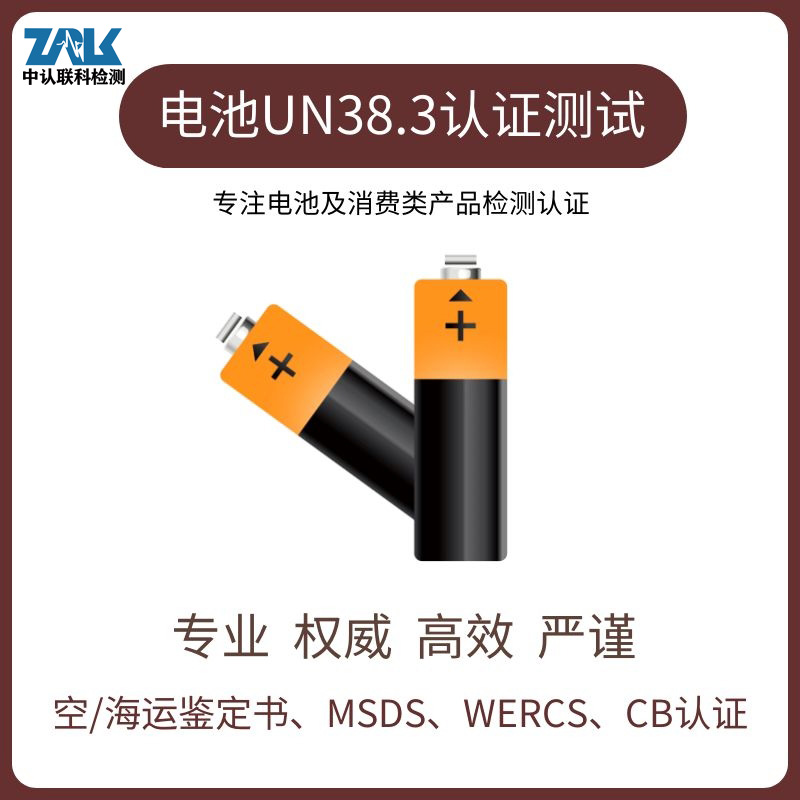
Subsequently, entrust a third-party laboratory with international recognition (ISO 17025) to submit samples and complete all tests. The regular test cycle is approximately 5-7 working days. If the samples fail the test (such as drop leakage, high-temperature bulging), the laboratory will issue a targeted rectification plan, such as optimizing the battery shell thickness or adjusting the packaging buffer design. After rectification and re-testing, it is sufficient to pass without re-submitting the complete set of materials.
After passing the tests, the laboratory issues a formal UN38.3 test report, which is the core document for cross-border transportation and needs to be accompanied by the air transportation condition identification report (UN38.3 + DGM report) for verification by logistics providers and customs. Note that the UN38.3 report has no fixed validity period. However, if the production process, core components, or packaging method of the battery changes, it is necessary to retest to ensure continuous compliance with transportation safety requirements.
In practice, three common misunderstandings must be avoided: First, mistakenly believing that having CCC certification means no need for UN38.3 certification, resulting in the goods being detained; second, sample parameters not being consistent with production products, causing the test report to be invalid; third, neglecting packaging adaptation and not designing buffer packaging in accordance with UN38.3 requirements, affecting customs clearance. Completing the UN38.3 certification for 21700 cylindrical batteries can not only ensure successful cross-border transportation but also help foreign trade enterprises avoid logistics risks and steadily expand the international energy storage accessory market.